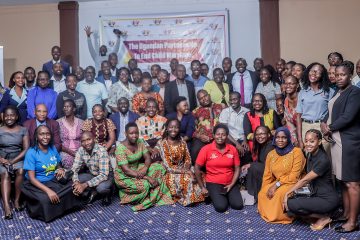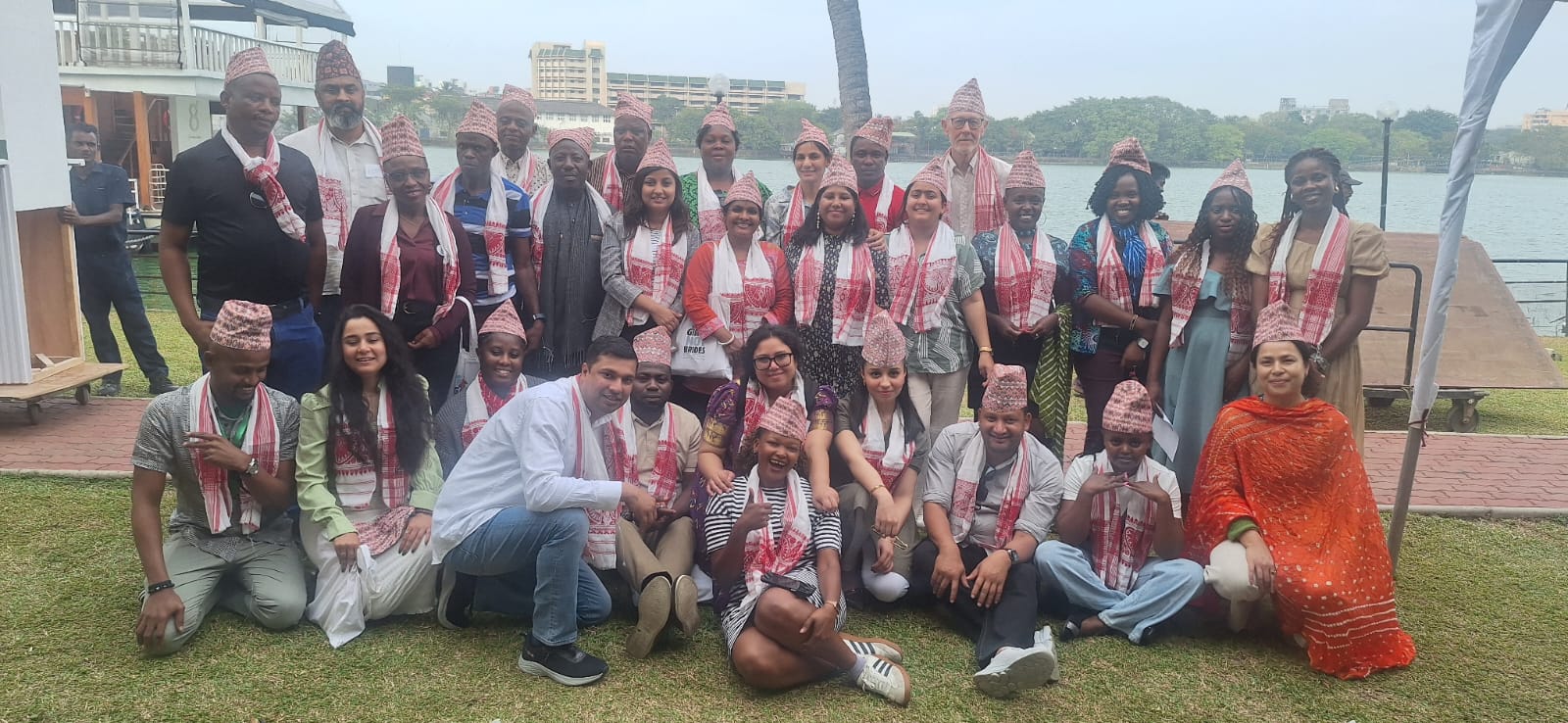
REPORT: GNB Movement Building and Advocacy Leadership Program (Module II)
A Transformative Leadership & Strategic Impact Training Workshop for GNB Partnerships and Coalition Members
Date: February 9th -13th, 2026
Location: Cinnamon Lakeside Hotel, Colombo – Sri Lanka
Prepared For: CEDO/GNBU
Prepared By: Ahmed Kibirige & Joyce Nakato
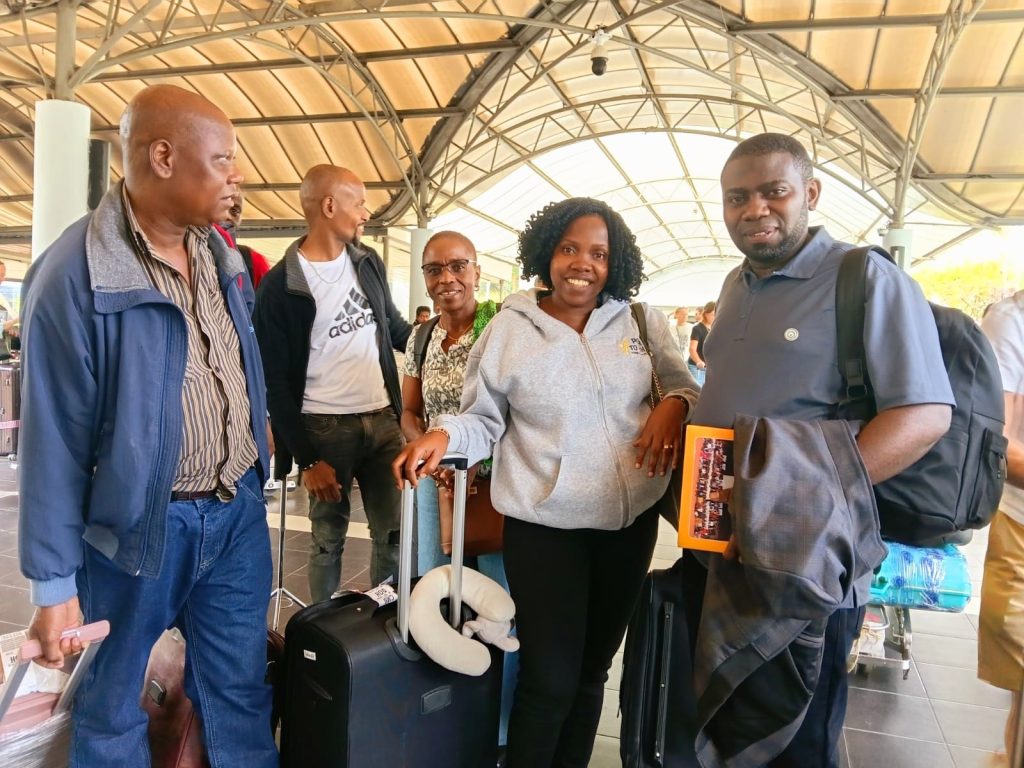
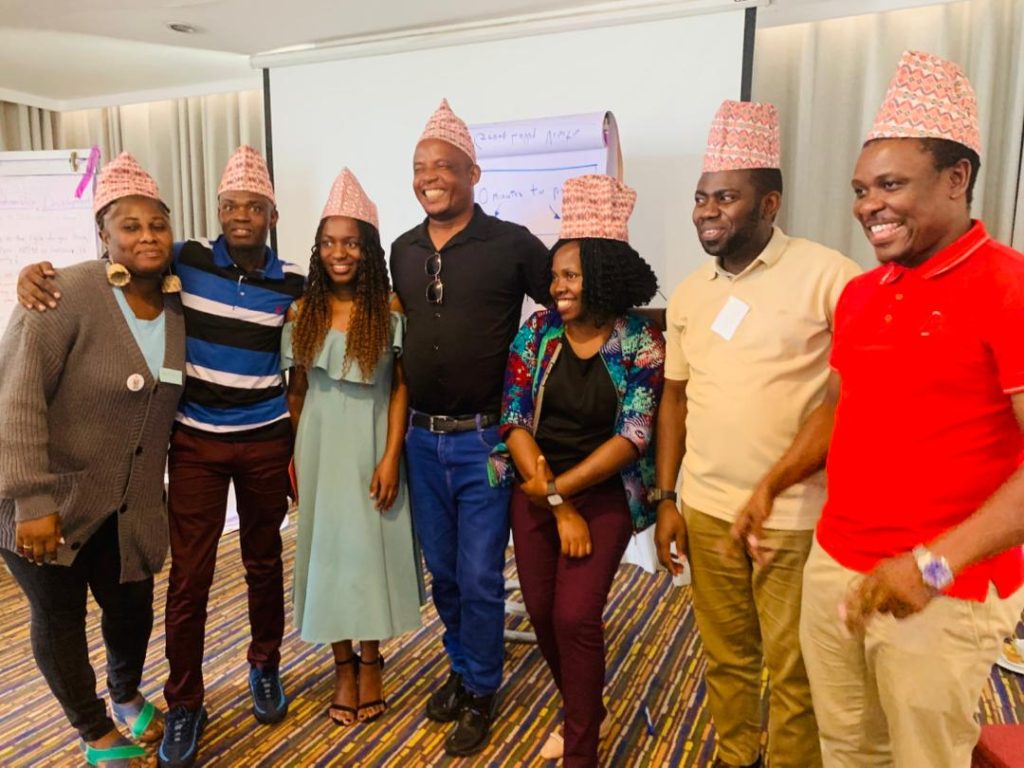
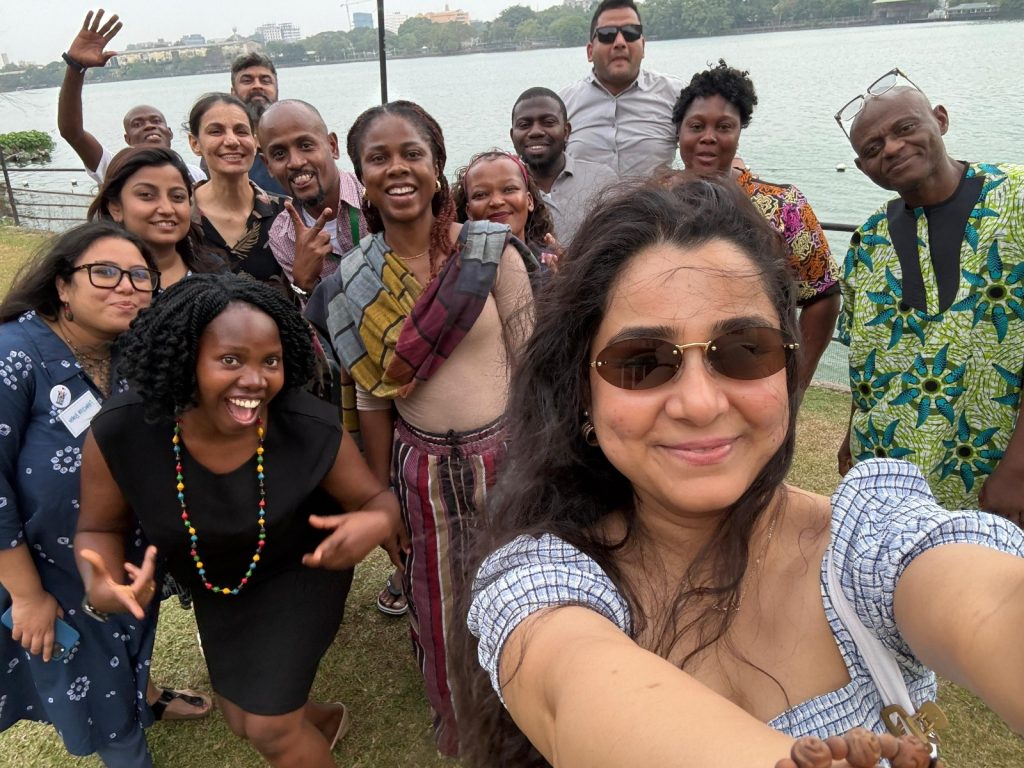
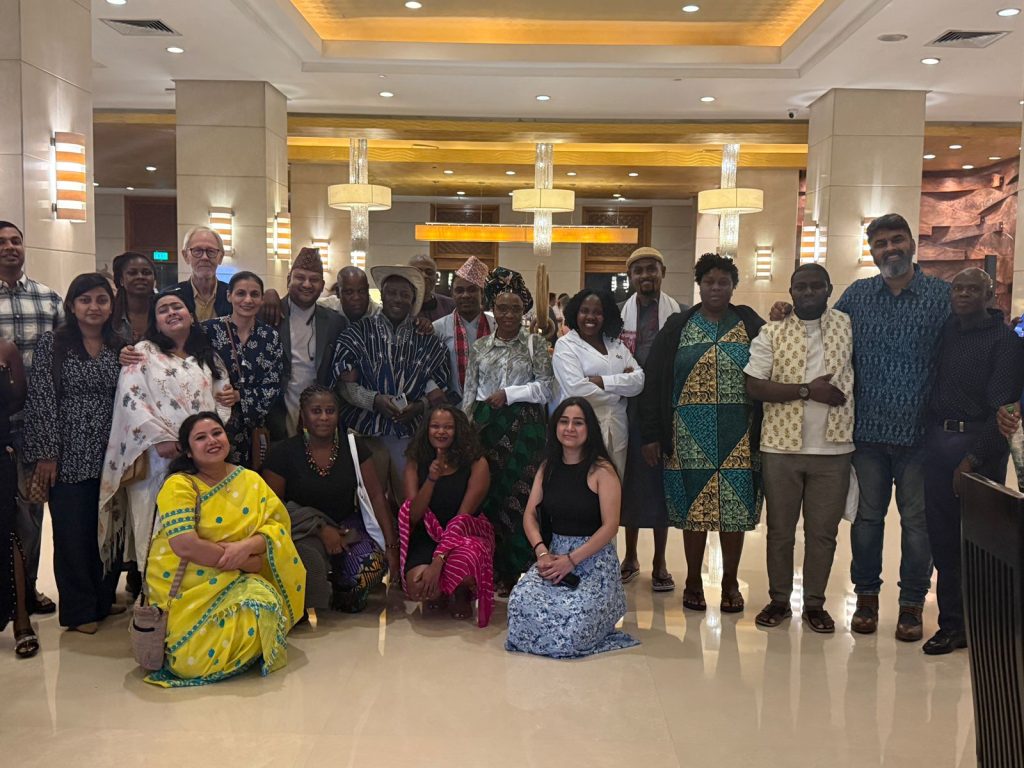
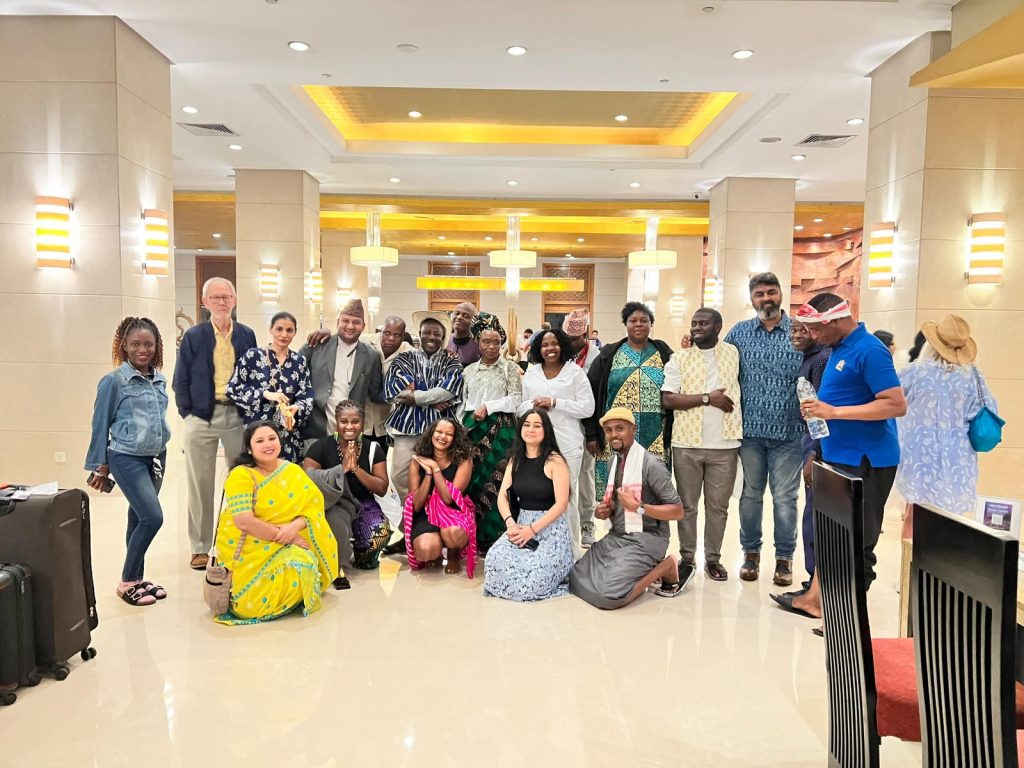
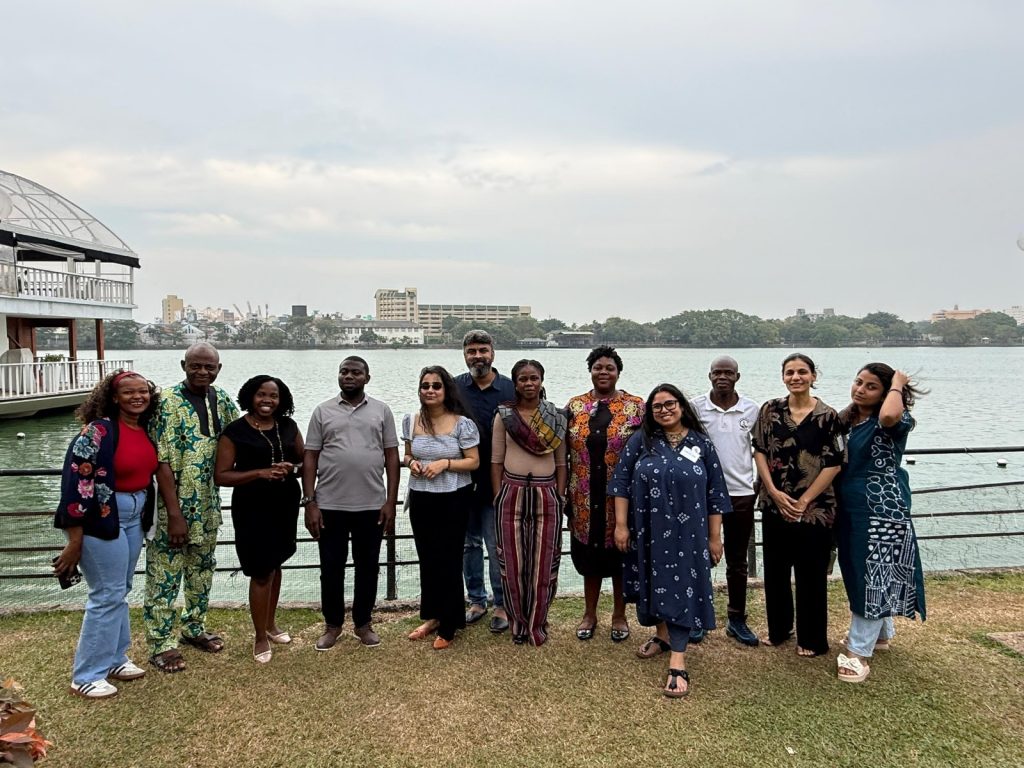
Participants: Delegates came from Uganda, Kenya, Tanzania, Malawi, Zimbabwe, Nigeria, Pakistan, Bangladesh, Nepal, Mozambique, India.
Executive Summary
The module two of the “Movement Building and Advocacy Leadership Training Workshop” was conducted to enhance the capacity of GNB members to lead through change, adopt inclusive feminist leadership principles, and improve organizational collaboration. Over five days, participants engaged in theoretical sessions and practical, scenario-based learning covering Myers-Briggs (MBTI), public narrative, and advocacy. Key outcomes included enhanced self-awareness regarding leadership styles, stronger coalition-building strategies, and a defined framework for applying feminist principles to operational projects.
Acknowledgment
Ugandan participants – Ahmed Kibirige and Joyce Nakato, will always be grateful to GNB for the opportunity to learn about the ideals of an ideal leader.
We would also like to express our sincere gratitude to our trainers and facilitators: Ms. Mbuki Mburu, Mr. Richard English, Ms. Shristi Kolakshyapati, Ms. Laia Surralles, Mr. Bimal Kumar and Ms. Peace Namayanja for the exceptional training on Movement Building and Advocacy Leadership. Your expertise, practical examples, and engaging facilitation style made complex concepts accessible and inspiring. The two modules have significantly equipped us with actionable strategies to strengthen our campaigns and lead our National Partnership with greater impact. We are grateful for your commitment to nurturing the real time generation of advocacy leaders.
We also thank GNBU for allowing us space to undertake this training and most especially, our sending organizations – CEDO Uganda and UYAHF for supporting our professional growth and development.
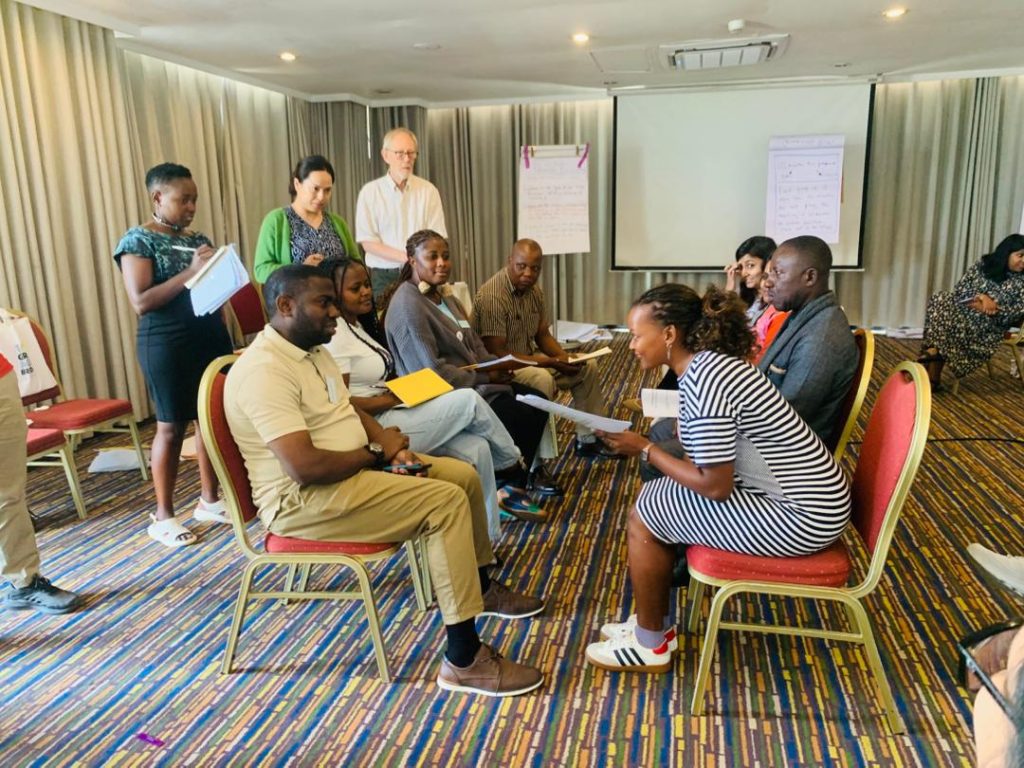
Workshop Objectives
- To equip leaders with tools to manage change and improve collaboration.
- To introduce and integrate feminist leadership practices.
- To improve strategic decision-making using MBTI and project consulting frameworks.
- To build skills in advocacy, storytelling, and coalition development.
Key Topics & Session Summaries
How Change Happens
This session explored the “unfreezing-change-refreeze” model, focusing on overcoming resistance to organizational, systems and cultural change. Participants mapped current organizational challenges and identified key stakeholders needed to drive transition.
Feminist Leadership
A critical examination of feminist leadership, emphasizing power-sharing, intersectionality, and dismantling patriarchal structures. The session moved beyond theory to practice, focusing on creating inclusive decision-making processes rather than just increasing the number of women in leadership.
Part of this session was an inspirational speaker, Lady Sarala Emanuel, a feminist activist and researcher based in Batticaloa, Eastern Sri Lanka who has worked for two decades with communities of primarily Tamil-speaking women affected by war and violence.
She took us on a journey of feminist and gender/social justice leadership, including:
- Key lessons from leading and sustaining campaigns for change
- Reflections on leadership, resilience, and influence in challenging contexts
- Tactics and creative approaches to mobilising communities and influencing power.
Myers-Briggs Type Indicator (MBTI) & Decision Making
Participants completed the MBTI assessment guided by Mr. Richard English, with a focus on how different personality types approach decision-making and risk. The session highlight was analyzing how diverse types (e.g., Thinking vs. Feeling, Judging vs. Perceiving) can lead to more balanced, comprehensive organizational decisions.
Project Consulting
An introduction to consulting frameworks, focusing on scoping, stakeholder analysis, and delivering value was delved into. Participants practiced “needs assessment” to distinguish between symptoms and root causes in project challenges.
Public Narrative – Story of Self, Us, and Now
This workshop used the Marshall Ganz framework to explore how to connect personal motivation (“story of self”) to shared values (“story of us”) and urgent action (“story of now”). Participants drafted narratives to advocate for their project goals, shared them with the rest for corrective guidance and these shall be published after refinement.
Partnership Development and Strong Coalitions
Focus was placed on moving from transactional relationships to transformational partnerships. Techniques for identifying, vetting, and sustaining coalitions were discussed, particularly for advocacy work.
External Influencing and Advocacy Role Plays
Using scenarios, participants practiced negotiation, lobbying, and media engagement. Role plays highlighted the importance of clear, evidence-based messaging when interacting with policymakers and external stakeholders.
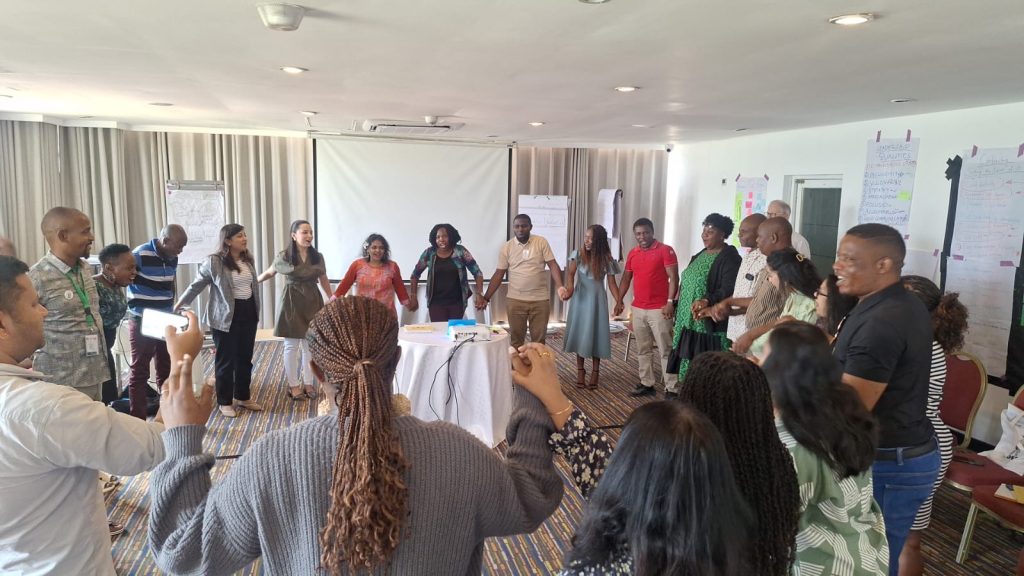
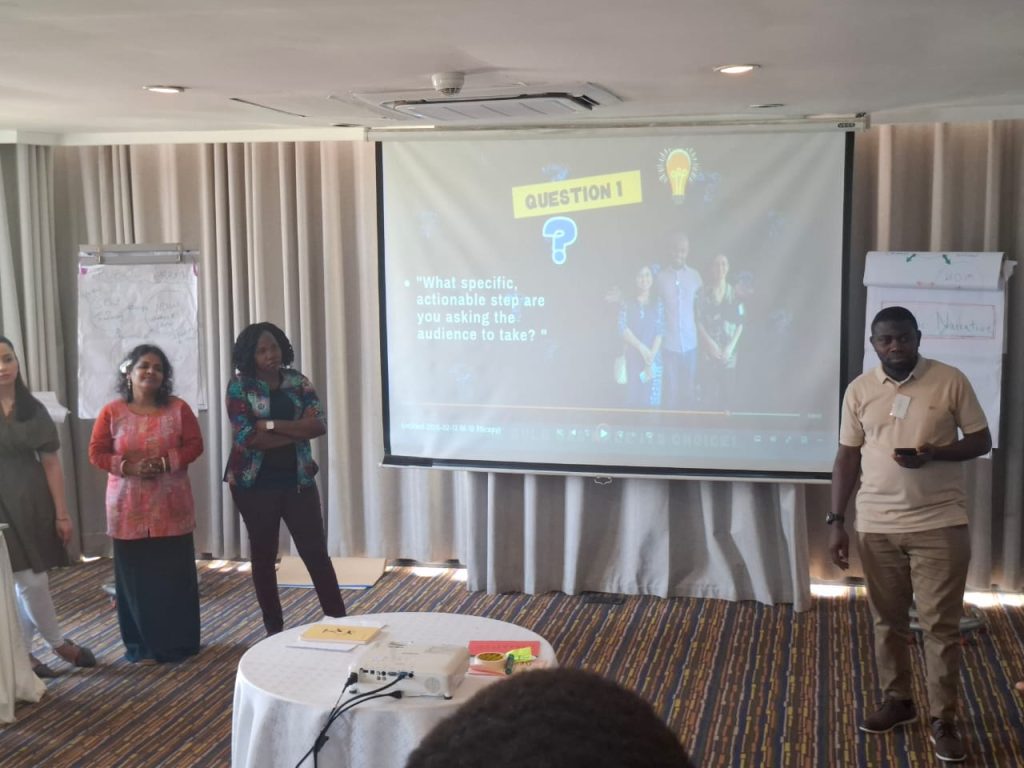
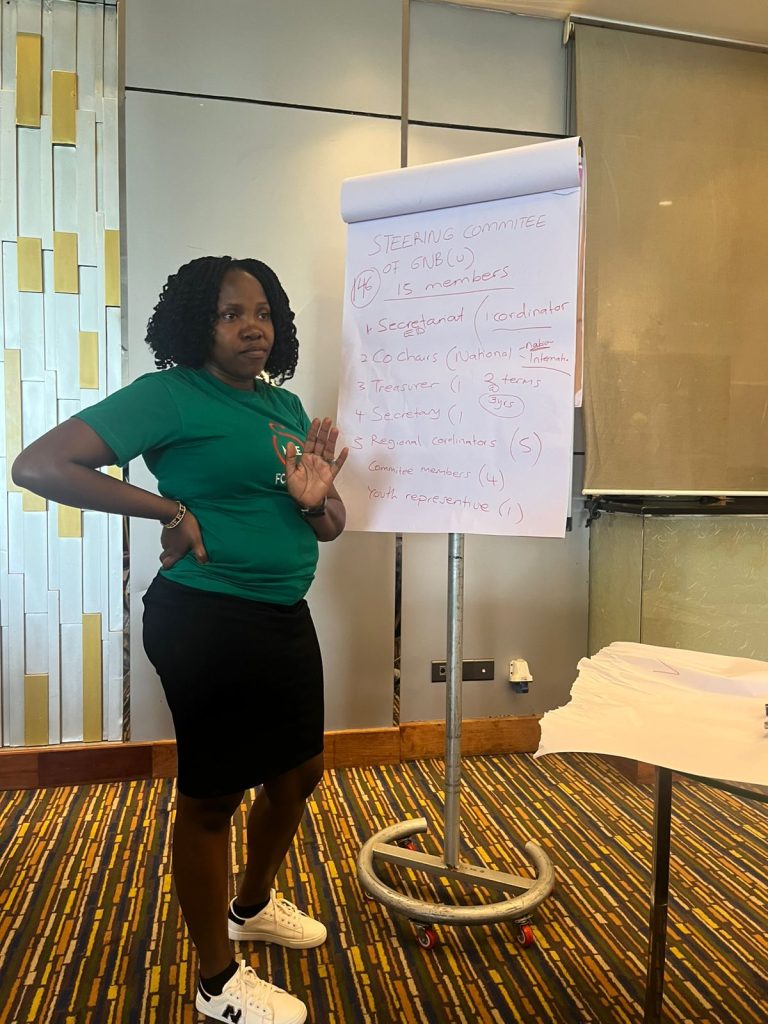
Leadership and Collaborating with Others
This session focused on emotional intelligence in leadership, moving from “command and control” to coaching and collaboration.
Thinking and Planning
The workshop concluded with action planning, focusing on integrating the week’s learnings into daily work. Teams developed 30-60-90 day plans for implementing new leadership approaches.
Participant Feedback and Insights
- Strengths: Participants highly rated the practical, experiential nature of the workshop, specifically the advocacy role-plays and public narrative exercises.
- Key Takeaway: A strong desire to apply feminist leadership principles (collaboration, power-sharing) to break down operational silos.
- Areas for Improvement: Several participants requested more time dedicated to the MBTI, particularly regarding team dynamics.
Key Learnings & Outcomes
- Behavioural Change: Participants reported a better understanding of how their personal, MBTI-driven leadership style impacts team dynamics.
- Strategic Shift: The team moved toward a deeper, more inclusive definition of leadership that centers on gender equality and collective responsibility.
- Practical Tools: Participants acquired, a ready-to-use framework for crafting public narratives for advocacy.
NB: It is worth noting that the Movement Building and Advocacy Leadership Training program is to strengthen the GNB affiliate civil society, fostering social change, and empowering leaders to address complex, long-term systemic issues. It goes beyond the traditional, single-issue advocacy by equipping activists with tools to build collective power, foster solidarity, and shift social norms to end child marriage, globally.
Recommendations & Next Steps
- Follow-up Session (Within 30 Days): The Ugandan team will request the rest of the participants to have a virtual check-in to review progress- 30 days post the training and troubleshoot challenges in applying feminist leadership in the workplace.
- Internal Coaching: Pair (buddy) participants agreed to support each other in the implementation of new, collaborative project consulting methods.
- Resource Integration: The Ugandan team has searched for, found and downloaded the “Feminist Organizational Development Tool” by The African Feminist Forum and shared it with the MBALP trainers for approval if found useful, and distribution among all participants for ongoing team reference because it could ease each one’s operationalization of feminist principles within organizations, partnerships and coalitions.
Delighted for GNBU representatives
Ahmed Kibirige: National Coordinator, GNBU National: Joyce Nakato: Co-Chair, GNBU